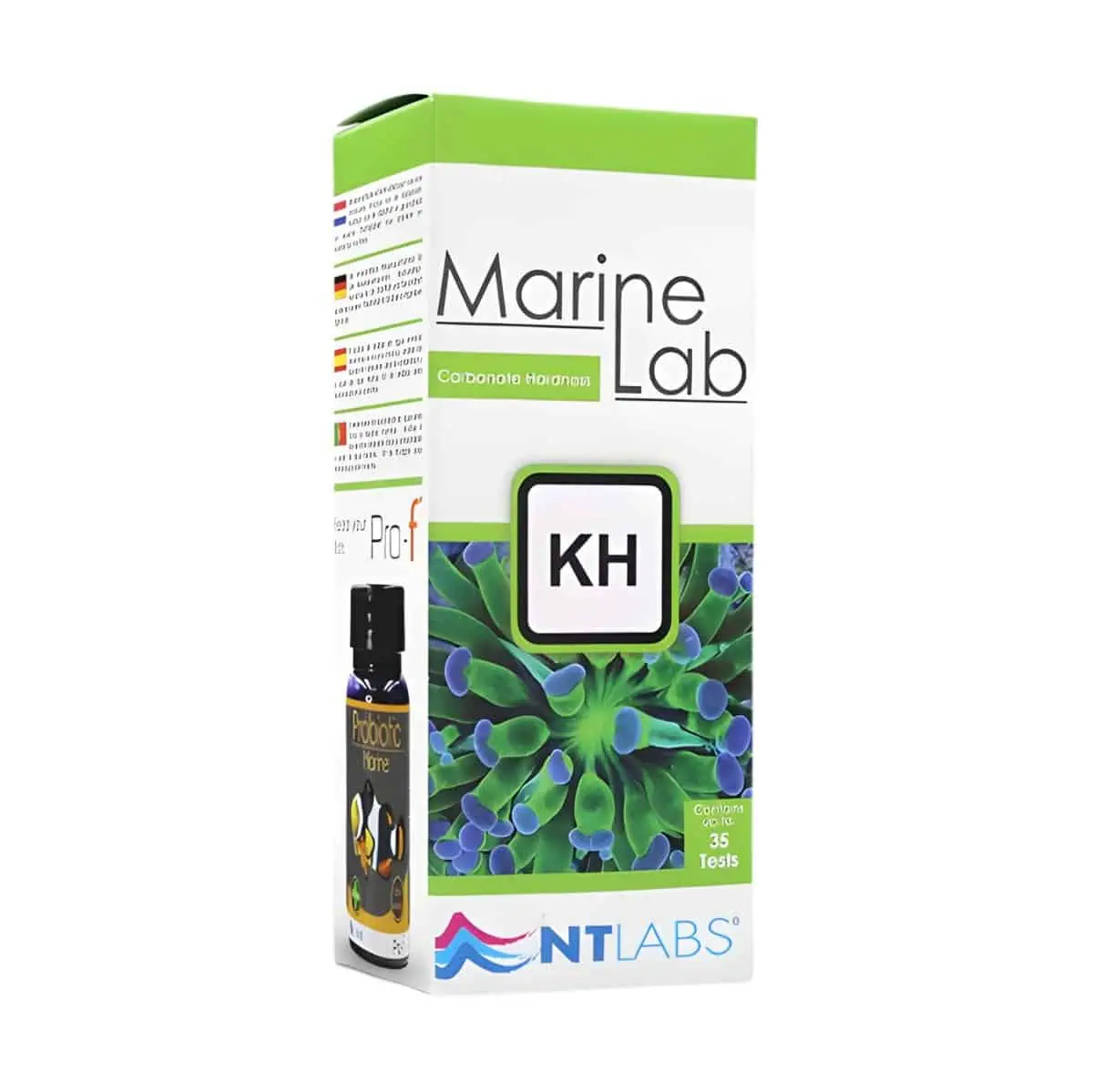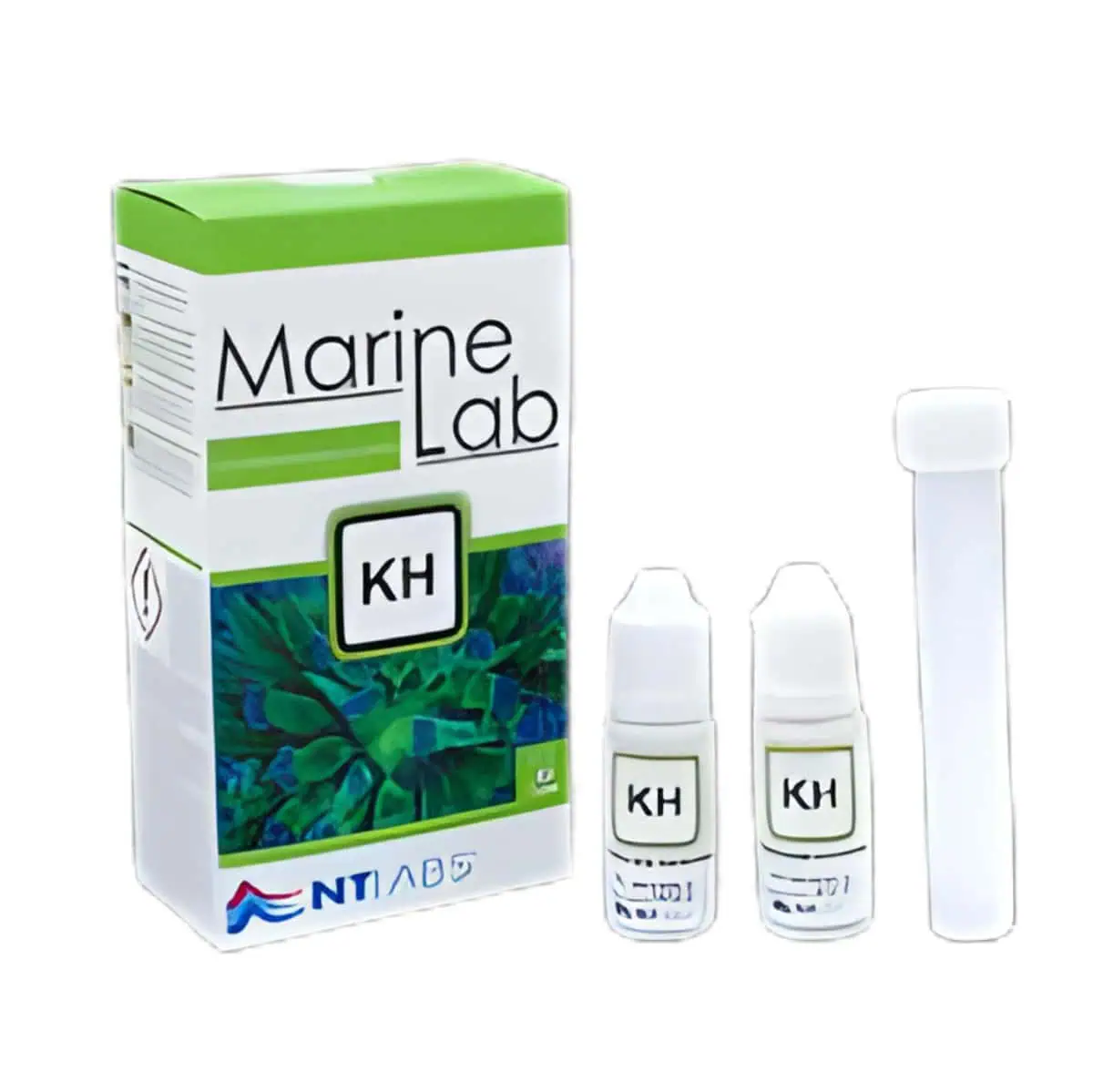
NT Labs Marine Lab Carbonate Hardness Test Kit for Aquariums – 40 Tests
Ensure a Stable Aquarium Environment with the NT Labs Marine Lab Carbonate Hardness (KH) Test Kit. KH, or Carbonate Hardness, is one of the most important factors to monitor in any marine aquarium. It helps to maintain a stable pH level and ensures the well-being of all aquatic life, especially marine species that rely on calcium-based exoskeletons, such as corals and other invertebrates. This test kit is designed to be easy to use, fast, and provide accurate results.
Why Test for Carbonate Hardness (KH)?
Carbonate Hardness (KH) is a measure of the water's ability to resist pH fluctuations. In natural seawater, the KH typically remains at around 7 dKH, but it can vary depending on the aquarium's setup and maintenance. KH is critical for keeping your aquarium's pH stable, which is vital for healthy aquatic life.
Why should you test for KH? Over time, acidic processes in your aquarium can lower the KH, and certain marine organisms, like corals, absorb carbonates. If KH drops too low, your aquarium's pH can fluctuate significantly, stressing fish and other aquatic life, leading to illness. Regular KH testing ensures a consistent and healthy environment for your fish, corals, and other marine species.
How Do You Test for KH?
- Step 1: Add 5 ml of aquarium water to the titration vessel provided.
- Step 2: Draw 1 ml of KH reagent using the syringe (ensure the bottom of the plunger is at the 1.0 ml mark).
- Step 3: Slowly dispense the reagent into the titration vessel while swirling to mix.
- Step 4: Keep dispensing until the solution changes from blue to yellow, without any hint of green.
- Step 5: Read the syringe value (not the liquid level) to determine KH in dKH.
By following these simple steps, you can accurately determine the Carbonate Hardness (KH) of your aquarium water, ensuring its stability and the health of your aquatic environment.
What Is the Ideal KH Level?
The natural KH in seawater is generally 7 dKH, but the ideal KH for your aquarium will depend on its setup. For a reef aquarium, a KH between 7 and 14 dKH is optimal. Maintaining this range helps keep your aquarium's pH level stable, providing an ideal environment for all marine life.
What to Do If the KH Level Is Too Low or Too High?
If the KH level in your aquarium is too low, it can cause significant pH swings. In this case, use a Marine Buffer Powder to gradually raise the KH to the desired level. For high KH levels, performing a partial water change with good quality reef salt will help lower the KH, but this should be done slowly to avoid stressing the aquarium’s inhabitants.
Product Features:
- Easy to Use: Simple steps to get accurate results quickly.
- Fast and Accurate: Provides reliable KH readings.
- Tests Carbonate Hardness: Measures the buffering capacity of your aquarium water.
- Contains 40 Tests: Enough for multiple tests, giving you a long-lasting solution.
Why NT Labs?
NT Labs is a trusted name in aquarium care, known for its high-quality test kits designed to ensure optimal water conditions for your marine life. Whether you are a hobbyist or a professional aquarium owner, NT Labs provides you with the tools needed to maintain a healthy and thriving aquatic environment.
Technical Details:
- Item Form: Water Test Kit
- Purpose: Carbonate Hardness (KH)
- Size: 40 Tests
- Ideal Pet: Fish
- Ideal Breed: All breeds
- Pet Life Stage: All life stages
Ensure the Best Water Quality for Your Aquarium! Accurate KH testing is essential for maintaining a healthy aquarium environment. With the NT Labs Marine Lab Carbonate Hardness Test Kit, you can achieve stable pH levels and provide the perfect habitat for your aquatic pets.