

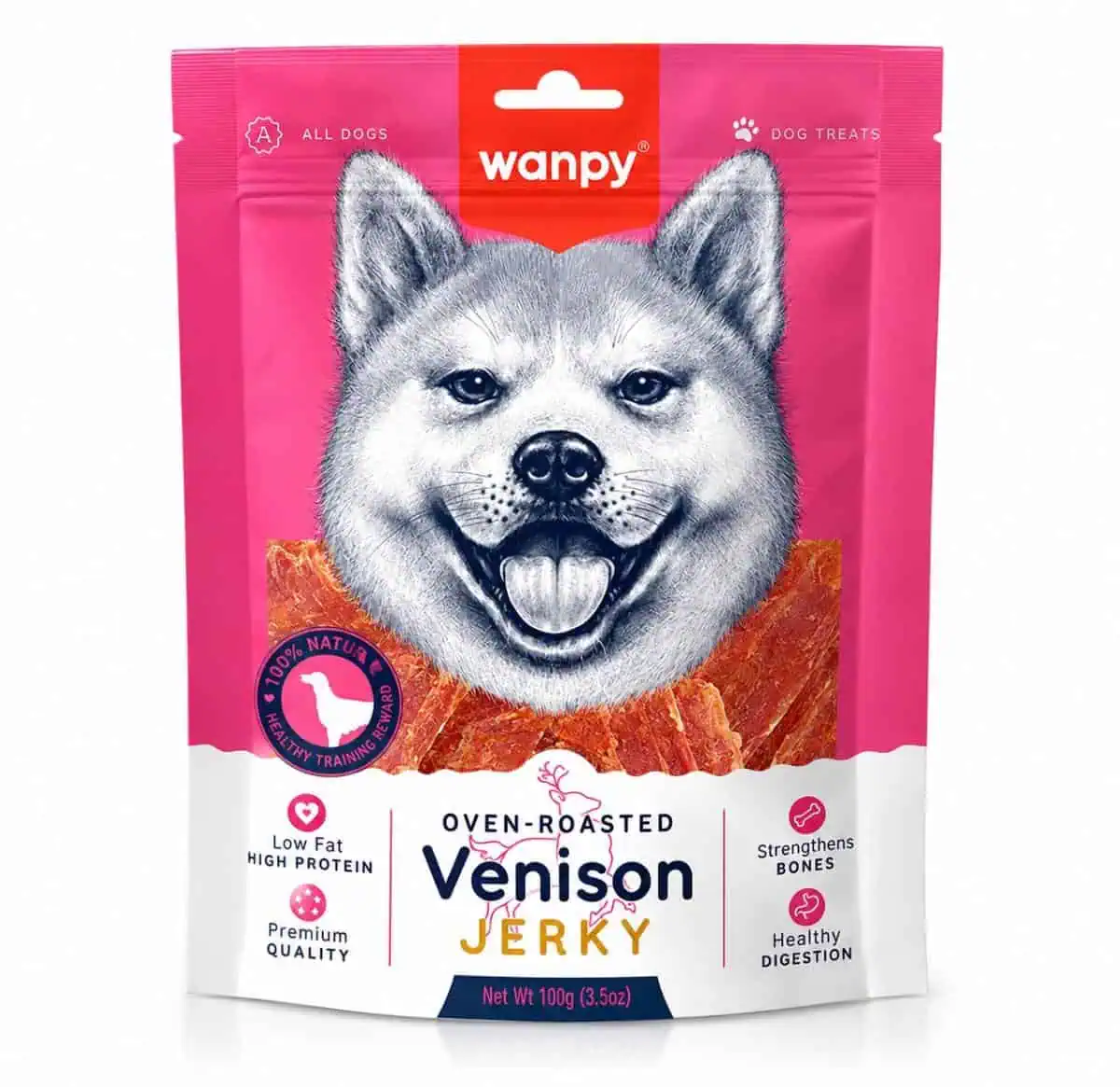
Choosing a treat for your dog involves more than finding a flavour they enjoy. Ingredients, nutritional composition, portion control, and your dog's individual dietary needs all matter. Wanpy Oven-Roasted Venison Jerky is a meat-based dog treat that offers an alternative to conventional biscuits and provides a convenient option for rewarding your pet between meals.
With venison and duck listed as its main ingredients, this 100 g snack may appeal to owners looking for a protein-rich treat. Here is what the packaging tells us about Wanpy Venison Jerky, how its ingredients fit into a dog's diet, and what to consider before offering it to your pet.
- Designed for dogs as a complementary treat.
- Contains venison, duck, vegetable protein, glycerin, maltitol, and salt.
- Label-declared crude protein: 62%.
- Label-declared crude fat: 3%.
- Suggested use: a snack between meals, with fresh drinking water available.
What Is Wanpy Oven-Roasted Venison Jerky?
Wanpy Venison Jerky is a meat-based snack marketed for dogs. The packaging identifies it as oven-roasted venison jerky and presents it as a high-protein, low-fat treat. Its 100 g pack is a practical format for keeping treats available for everyday rewards, provided the product is stored according to the package instructions.
Unlike a complete dog food formulated to provide the nutrients required for daily feeding, this product is intended to supplement your dog's regular meals. It can be considered for reward time, enrichment, or an occasional snack, depending on your dog's preferences and dietary requirements.
What Are the Main Benefits of Wanpy Venison Jerky?
1. A protein-rich treat
The supplied label declares 62% crude protein. Protein provides amino acids that dogs use to maintain muscles, support tissue repair, and carry out normal body functions. This makes protein an important part of canine nutrition.
However, a high protein percentage does not automatically make a treat nutritionally complete. Your dog's overall diet, calorie intake, health, and activity level remain important when choosing snacks.
2. A relatively low-fat option according to the label
The packaging declares 3% crude fat. Owners comparing treats may find this figure useful when reviewing nutritional labels. Nevertheless, the fat percentage alone does not establish the product's total calorie content or prove that it is suitable for every dog that needs weight management.
If your dog follows a veterinary weight-management plan, check with your veterinarian before introducing new treats. Portion size and total daily calories still matter.
3. Meat ingredients for a different flavour
Venison and duck are the first two ingredients listed on the supplied packaging. Their presence gives the treat a different ingredient profile from snacks made primarily with chicken or beef.
Dogs can have individual flavour preferences, so a venison-based treat may be worth considering if your dog enjoys meat-based rewards. It is not, however, guaranteed to suit every dog's taste or digestive tolerance.
4. Convenient for everyday rewards
Meat-based jerky treats can be useful when rewarding desired behaviour or offering an occasional snack. Check the texture and size of each piece before serving it. If the treat can be safely divided, smaller portions may make it easier to manage how much your dog receives.
The actual suitability of a piece depends on its texture, your dog's chewing habits, and the dog's size. Supervise your dog while eating rather than assuming every piece is appropriate for every breed.
Wanpy Venison Jerky Ingredients Explained
Understanding the ingredient list helps you decide whether this dog treat fits your pet's needs. The following explanations describe the general roles of the listed ingredients; they do not imply that every ingredient offers a specific medical benefit.
| Ingredient | What it means |
|---|---|
| Venison | Deer meat that provides animal protein and contributes to the treat's flavour. |
| Duck | An additional animal-protein ingredient. It is important for dogs with known duck sensitivities or allergies. |
| Vegetable protein | A plant-derived protein ingredient. The packaging does not specify its exact source. |
| Glycerin | An ingredient commonly used to help retain moisture and maintain texture in pet treats. |
| Maltitol | A sugar alcohol used in some food products for its sweetening and formulation properties. Individual tolerance may vary. |
| Salt | A source of sodium. Dogs with conditions requiring sodium restriction may need a different treat. |
If your dog has food allergies, a sensitive digestive system, or a prescribed elimination diet, review the full ingredient list with your veterinarian before feeding this product. Because the treat contains both venison and duck, it should not be treated as a single-protein product.
Wanpy Venison Jerky Nutritional Analysis
The supplied packaging lists the following guaranteed or constituent analysis values:
| Nutritional component | Label value |
|---|---|
| Crude protein | 62.0% |
| Crude fat | 3.0% |
| Crude fiber | 0.5% |
| Crude ash | 5.5% |
| Moisture | 18.0% |
How should you interpret these figures? Crude protein and crude fat indicate the proportions of these nutrients reported by the manufacturer. Crude fiber measures a portion of the product's fiber content, while crude ash represents the mineral residue remaining after laboratory analysis. Moisture indicates the water content of the treat.
These values help you compare products, but they do not provide a complete nutritional assessment. The label information supplied here does not include calories per treat, a complete mineral breakdown, or a recommended daily quantity.
Which Dogs May Be Suitable for This Treat?
Wanpy Venison Jerky may be worth considering for dogs that enjoy meat-based snacks and can safely chew the product's texture. Its suitability should be assessed individually rather than assumed from breed or size alone.
- Adult dogs: May enjoy it as an occasional reward when it fits their dietary needs.
- Training sessions: If the jerky can be divided safely into small pieces, it may be used as a reward. Account for the calories from all treats given during training.
- Dogs with weight concerns: The listed fat percentage may be useful when comparing options, but confirm the calorie content and serving suitability with your veterinarian.
- Dogs with food sensitivities: Check both the venison and duck ingredients, as well as the other listed components, before offering the treat.
The supplied packaging does not establish a specific minimum age or provide a detailed life-stage feeding chart. For puppies, senior dogs, or dogs with dental or swallowing difficulties, ask your veterinarian whether this particular treat and texture are appropriate.
How to Feed Wanpy Venison Jerky Safely
- Start with a small amount. When introducing a new treat, offer a small portion and observe your dog's response.
- Check the texture and size. Choose a piece your dog can manage safely. Do not offer a piece that could present a choking risk.
- Use it as a snack between meals. Follow the intended supplementary use rather than replacing your dog's normal complete and balanced food.
- Keep fresh water available. This is specifically recommended on the product packaging.
- Moderate total treat intake. Treats should generally account for no more than 10% of a dog's daily calorie intake, with the rest coming from a complete and balanced diet. A veterinarian can advise on a lower allowance when necessary.
- Monitor your dog. Stop feeding the treat and seek veterinary advice if you notice vomiting, diarrhea, itching, swelling, or another concerning reaction.
- Store it according to the label. Follow the package directions for storage and resealing, and check the product's condition before serving.
The packaging shown does not specify a daily serving size or calorie count. Avoid inventing a fixed number of strips per day. Your dog's weight, activity, normal diet, and health needs should guide portion decisions.
When Should You Choose Another Treat?
Although a meat-based jerky snack can be convenient, it is not the right choice for every dog.
- Known duck allergy: Duck is explicitly listed as an ingredient, so this product may not be suitable.
- Strict elimination diet: Multiple protein sources and additional ingredients can complicate a dietary trial. Use only treats approved by your veterinarian.
- Prescribed low-sodium diet: Salt is included, and the packaging does not state the precise sodium content.
- Weight-management plan: A low crude-fat percentage does not necessarily mean low calories. Check the calorie content before making it a regular snack.
- Difficulty chewing or swallowing: A jerky treat may not be appropriate for a dog that struggles with firm textures or tends to swallow large pieces.
Contact your veterinarian before introducing new treats if your dog has a medical condition, requires a therapeutic diet, or has a history of food reactions.
Is Wanpy Venison Jerky Worth Considering?
Wanpy Oven-Roasted Venison Jerky is an option for dog owners looking for a meat-based complementary treat with a label-declared 62% crude protein and 3% crude fat. Its ingredient list includes venison and duck, alongside vegetable protein, glycerin, maltitol, and salt.
The most important consideration is whether the ingredients, texture, and nutritional profile suit your individual dog. Use it as a snack rather than a meal replacement, keep portions moderate, and check with your veterinarian when allergies or medical dietary requirements are involved.
If you are considering this treat, review the current product packaging and full feeding information before use. You can also explore the relevant product page on your pet store website for verified product details and purchasing information.




Comments (0)